Author Description
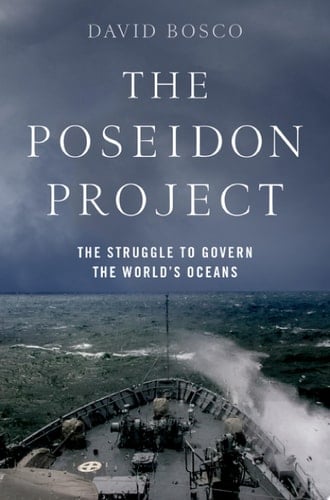
A vibrant exploration of past and present controversies surrounding control of the world's oceans.In 1609, the Dutch lawyer Hugo Grotius rejected the idea that even powerful rulers could own the oceans. "A ship sailing through the sea," he wrote, "leaves behind it no more legal right than it does a track." A philosophical and legal battle ensued, but Grotius's view ultimately prevailed. To this day, "freedom of the seas" remains an important legal principle and a powerful rhetorical tool. Yet in recent decades, freedom of the seas has eroded in multiple ways and for a variety of reasons. During the world wars of the 20th century, combatants imposed unprecedented restrictions on maritime commerce, leaving international rules in tatters. National governments have steadily expanded their reach into the oceans. More recently, environmental concerns have led to new international restrictions on high seas fishing. Today's most dangerous maritime disputes-including China's push for control of the South China Sea-are occurring against the backdrop of major changes in the way the world treats the oceans. As David Bosco shows in The Poseidon Project, the history of humanity's attempt to create rules for the oceans is alive and relevant. Tracing the roots of the law of the sea and the background to current maritime disputes, he shows that building effective ocean rules while preserving maritime freedoms remains a daunting task. Bosco analyzes how fragile international institutions and determined activists are struggling for relevance in a world still dominated by national governments. As maritime tensions develop, The Poseidon Project will serve as an essential guide to the continuing challenge of ocean governance.
Menrva's Summary
THE THESIS
How can international governance effectively manage the world's oceans while balancing the competing interests of national sovereignty and the principle of freedom of the seas? David L. Bosco, an associate professor at Indiana University, examines the historical evolution of maritime law from the 17th-century arguments of Hugo Grotius to contemporary geopolitical conflicts. He utilizes a framework of institutional analysis to evaluate how international bodies, environmental activists, and powerful nation-states interact to shape the current maritime order. The text argues that the historical precedent of open seas is increasingly challenged by modern territorial ambitions and environmental regulation.
THE SCOPE MAP
What You Will Find
- Historical analysis of the evolution of the 'freedom of the seas' legal principle.
- Examination of 20th-century maritime restrictions during global conflicts.
- Case studies on contemporary maritime disputes, specifically the South China Sea.
- Assessment of the efficacy of international institutions in governing high seas resources.
Scope Limits
- The text does not provide a comprehensive technical manual for modern maritime navigation or naval warfare tactics.
- It does not offer a predictive model for future specific maritime treaties or legislative outcomes.
THE AUTHORITY PERSPECTIVE
Experts and political science scholars identify this work as a clear, accessible overview of the complex intersection between international law and geopolitical strategy. Readers frequently note that the prose remains grounded in historical context while successfully addressing the contemporary challenges of ocean governance.
Page Count:
315
Publication Date:
2021-01-01
ISBN-10:
0190265663
ISBN-13:
9780190265663
History
LAW OF THE SEA
Maritime law
International relations
Geopolitics
Professional Career & Trade