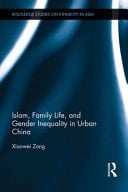
Author Description
1 Between Islamic Affiliation And Gender Inequality 1 -- Five Aspects Of Gender Inequality 2 -- Possible Mechanisms Of Sexual Stratification 2 -- Religiosity As A Mechanism Of Gender Inequality 6 -- Family Processes As A Mechanism Of Gender Inequality 10 -- Changes And Persistence In Family Life Among Uyghurs 11 -- How Do Family Processes Affect Gender Inequality? 15 -- Do Family Processes Matter? 21 -- 2 Historical Contexts And Research Design 24 -- Xinjiang And Ürümchi 24 -- The Demographic History Of Uyghurs And Han Chinese In Xinjiang 27 -- Islam In Xinjiang 33 -- Fieldwork In Ürümchi 36 -- Analytic Methods 39 -- Dependent Variables 39 -- Independent Variables 40 -- 3 A Hard Choice: To Work Or Not To Work? 48 -- Gender Gaps In Employment In China 50 -- Muslim Women's Labour Supply 51 -- Field Observations In Ürümchi 53 -- Why Are Women Less Likely Than Men To Be Employed? 57 -- Is Religion Related To Female Labour-force Participation? 62 -- Religiosity And Muslim Women's Labour Supply 64 -- Does Religiosity Affect Gender Inequality In Work In Ürümchi? 64 -- Do Family Processes Affect Women's Market Behaviour? 68 -- Family Processes And Gender Inequality In Employment In Ürümchi 71 -- Supplementary Analyses 75 -- 4 Why Do Uyghur Men Earn More Than Uyghur Women? 77 -- The Gender Earnings Gap In China 78 -- Gender Earnings Gaps Among Uyghurs 79 -- Why Do Women Earn Less Than Men? 81 -- Is Religious Affiliation Related To Earnings? 85 -- Religiosity And Gender Inequality In Income 85 -- Religiosity And Uyghur Women's Earnings 87 -- Family Processes As A Determinant Of Earnings 89 -- Family Processes And Gender Inequality In Income 91 -- Supplementary Analyses 93 -- 5 Who Does Household Chores? 95 -- Why Are Gendered Divisions Of Household Chores Important? 95 -- How Are Household Tasks Measured? 97 -- Gender Inequality In Housework Among Uyghurs 99 -- How Can Gendered Divisions Of Household Chores Be Explained? 106 -- Religiosity And The Allocation Of Household Chores 109 -- Religiosity And Housework Among Uyghur Couples 110 -- Family Processes And Housework Among Uyghurs 115 -- Supplementary Analyses 120 -- 6 Who Manages The Household? 122 -- Why Must Household Management Be Studied? 123 -- How Is Household Management Measured? 124 -- Gender And Household Management 125 -- The Gendered Division Of Household Management In Ürümchi 126 -- Possible Accounts Of The Gendered Division Of Household Management 134 -- Religiosity And Household Management 135 -- Family Processes And Household Management 140 -- Supplementary Analyses 144 -- 7 Who's The Boss? 146 -- What Is Family Power? 146 -- The Distribution Of Family Power Among Uyghurs 148 -- Relative Resources And Gender Inequality In Domestic Power 152 -- Gender Ideology And Family Power 156 -- Islamic Affiliation And Family Power 157 -- Religiosity And Family Power In Urumchi 158 -- Family Work And Spousal Power 161 -- Family Processes And Domestic Power 165 -- Supplementary Analyses 169 -- 8 All In The Family 172 -- Gender Inequalities And Parities Among Uyghurs 172 -- Why Is Religiosity A Weak Mechanism Of Gender Inequality? 174 -- Why Are Family Processes A Major Mechanism Of Gender Inequality? 177 -- Policy Implications 179. Xiaowei Zang. Includes Bibliographical References And Index.
Page Count:
233
Publication Date:
2011-01-01
ISBN-10:
0203180976
ISBN-13:
9780203180976
Science
MUSLIM WOMEN
MUSLIMS
Uighur Turkic people
Discrimination
Community Tags
Reader Comments
Share Your Thoughts
No comments yet. Be the first to share your thoughts!