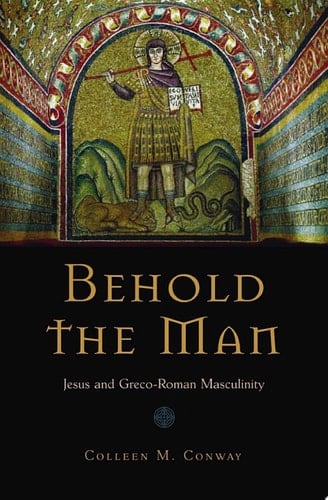
Author Description
In this book, Colleen Conway looks at the construction of masculinity in New Testament depictions of Jesus. She argues that the New Testament writers necessarily engaged the predominant gender ideology of the Roman Empire, whether consciously or unconsciously. Although the notion of what constituted ideal masculinity in Greek and Roman cultures certainly pre-dated the Roman Empire, the emergence of the Principate concentrated this gender ideology on the figure of the emperor. Indeed, critical to the success of the empire was the portrayal of the emperor as the ideal man and the Roman citizen as one who aspired to be the same. Any person who was held up alongside the emperor as another source of authority would be assessed in terms of the cultural values represented in this Roman image of the "manly man." Conway examines a variety of ancient ideas of masculinity, as found in philosophical discourses, medical treaties, imperial documents, and ancient inscriptions. Manliness, in these accounts, was achieved through self-control over passions such as lust, anger, and greed. It was also gained through manly displays of courage, the endurance of pain, and death on behalf of others. With these texts as a starting point, Conway shows how the New Testament writings approach Jesus' gender identity. From Paul's early letters to the Gospels and Acts, to the book of Revelation, Christian writings in the Bible confront the potentially emasculating scandal of the cross and affirm Jesus as ideally masculine. Conway's study touches on such themes as the relationship between divinity and masculinity; the role of the body in relation to gender identity; and belief in Jesus as a means of achieving a more ideal form of masculinity. This impeccably researched and highly readable book reveals the importance of ancient gender ideology for the interpretation of Christian texts.
Menrva's Summary
THE THESIS
How did the authors of the New Testament navigate the prevailing Greco-Roman gender ideologies when constructing the identity of Jesus? Colleen Conway, a scholar of early Christianity, posits that New Testament writers engaged with the Roman imperial gender framework, which centered on the emperor as the embodiment of ideal masculinity. By analyzing philosophical, medical, and imperial texts alongside biblical narratives, Conway argues that these early Christian authors sought to reconcile the perceived emasculation of the crucifixion with the cultural necessity of presenting Jesus as an authoritative, masculine figure.
THE SCOPE MAP
What You Will Find
- Analysis of Greco-Roman gender ideology, specifically the 'manly man' archetype centered on the emperor.
- Examination of philosophical, medical, and imperial documents from the Roman Principate.
- Comparative study of New Testament texts, including Pauline letters, the Gospels, Acts, and Revelation.
- Exploration of themes such as self-control, endurance of pain, and the relationship between divinity and gender.
Scope Limits
- The study focuses primarily on the construction of masculinity within the New Testament rather than a comprehensive history of gender in the ancient world.
- It does not provide an exhaustive analysis of every mention of gender in early Christian literature outside the canon.
THE AUTHORITY PERSPECTIVE
Scholars and students of biblical studies frequently cite this work as a significant contribution to the intersection of gender theory and historical theology. Readers often note the academic rigor of the prose, which balances complex cultural analysis with clear, accessible arguments for those familiar with the subject matter.
Page Count:
254
Publication Date:
2008-01-01
ISBN-10:
0190296003
ISBN-13:
9780190296001
Religion
History
New Testament
Special Topics
Bibles
Gender Studies