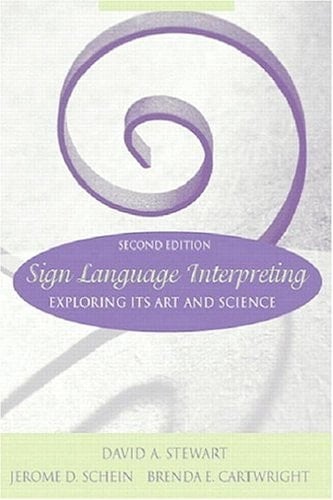
Sign Language Interpreting: Exploring Its Art and Science (2nd Edition)
0
0
Author Description
Product DescriptionSign Language Interpreting: Exploring Its Art and Science is a comprehensive exploration of the practice and research relating to sign language interpreting. A pleasant, conversational style of writing is used to present the problems, issues, and options in this field as they are best known today. The text nurtures a rational discourse that will enhance the development of professional interpreting in ways that will satisfy participants. The reader is taken on a journey from the early days of interpreting, to the professionalization of interpreters, to an examination of past and present models of interpreting. Two models are introduced that take into account the influence of all participants and environmental factors in a variety of interpreting situations. The business and ethical aspects of interpreting are discussed while focusing on current practice. The text introduces first-time users to sign language and how it affects interpreting. For those knowledgeable about sign language interpreting, it gathers together a wealth of previously scattered materials. For scholars and researchers, it directs their attention to new areas for study.From the Back CoverSign Language Interpreting: Exploring Its Art and Science is a comprehensive exploration of the practice and research relating to sign language interpreting.The reader is taken on a journey from the early days of interpreting, to the professionalization of interpreters, to an examination of past and present models of interpreting. Two models are introduced that take into account the influence of all participants and environmental factors in a variety of interpreting situations. The text introduces first-time users to sign language and how it affects interpreting and for those knowledgeable about sign language interpreting, it gathers together a wealth of previously scattered materials. For scholars and researchers, it directs their attention to new areas for study.Features: Two models address cognitive factors involved in the process of interpreting and the interaction of participants and environmental factors. The practice of interpreting is examined from the perspective of the interpreter, the deaf person, and the person who uses speech. Ethical issues are explored and ethically challenging scenarios stimulate self-examination and discussions among interpreters and other participants. The reader is shown how culture interacts with languages, signed and spoken, to shape the accuracy of an interpretation. The practice of interpreting is investigated in a variety of settings and its business aspect and future directions are discussed. Totally revised chapter 3, “Models of Interpreting.”Related titles:Teaching Deaf and Hard of Hearing Students: Content, Strategies, and Curriculum, 1/eDavid A. StewartThomas N. KluwinISBN# 0-205-30768-XLearning American Sign Language: Levels I & II--Beginning & Intermediate, 2/eTom L. HumphriesCarol A. PaddenIllustrations by Rob Hills, Peggy Lott & Daniel W. RennerISBN# 0-205-27553-2Deaf People: Evolving Perspectives from Psychology, Education, and Sociology, 1/eJean F. AndrewsIrene W. LeighMary T. Weiner AndrewsISBN# 0-205-33813-5Best Practices in Educational Interpreting, 2/eBrenda Chafin SealISBN# 0-205-38602-4Psychosocial Aspects of Deafness, 1/eNanci A. ScheetzISBN# 0-205-34347-3Psychological, Social, and Educational Dimensions of Deafness, 1/eBarbara R. SchirmerISBN# 0-205-17513-9Language Learning in Children Who Are Deaf and Hard of Hearing: Multiple Pathways, 1/eSusan R. EasterbrooksSharon BakerISBN# 0-205-33100-9
Page Count:
0
Publication Date:
2004-01-01
ISBN-10:
0205454453
ISBN-13:
9780205454457
LANGUAGE AND CULTURE
Speech
Community Tags
Reader Comments
Share Your Thoughts
No comments yet. Be the first to share your thoughts!