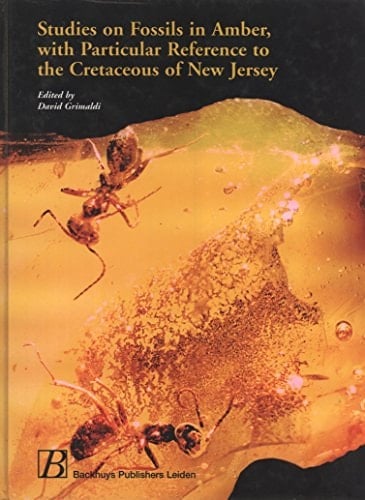
Studies on Fossils in Amber, with Particular Reference to the Cretaceous of New Jersey
0
0
Author Description
Amber, or fossilized tree resin, has been collected in the Baltic region for at least 13 millennia, and used as a precious and semi-precious substance. Now, it is renowned scientifically from various deposits around the world for its preservation of myriad forms of ancient life, finer than in any other kind of fossil. The largest and most popular deposits are the Eocene Baltic amber and Miocene amber from the Dominican Republic, but amber from the Cretaceous Period (140-65 million years ago [mya]) is of the greatest scientific interest.<br/> Besides the extinction of ammonites, dinosaurs, and other life at the end of the Cretaceous, an explosive radiation of the angiosperms occurred in the middle of this Period, which transformed terrestrial ecosystems. <br/> This volume is largely devoted to an extraordinary deposit of amber, from the Turonian (ca. 90 mya) of New Jersey, USA. The deposit is not only the most diverse known thus far from the Cretaceous, but it was formed during the angiosperm radiations. Research is also presented on amber from the Lower Cretaceous of Lebanon (120 mya), among the oldest amber in the world that contains insects. 29 Specialists have contributed 23 papers on methods for preparation and imaging of amber fossils, paleoecology of the New Jersey amber deposits, and systematics of over 100 genera and species in 11 orders of animals. Among the discoveries are the oldest fossil in the phylum Tardigrada, the most diverse Cretaceous record of scale insects (Coccinea) in the world, a remarkable diversity of neuropterans, and several groups of biting midges whose diversity relates to the evolution of vertebrate blood feeding. These discoveries are presented in nearly 200 pages of illustrations and photographs, 17 of them in color.
Page Count:
498
Publication Date:
2000-01-01
ISBN-10:
9057820609
ISBN-13:
9789057820601