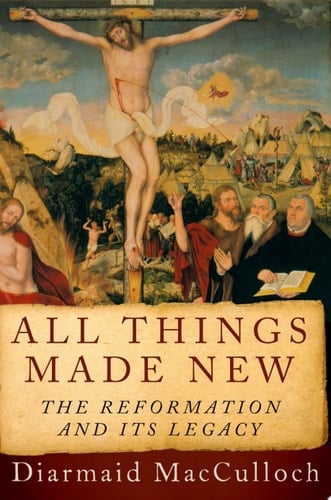
Author Description
The Most Profound Characteristic Of Western Europe In The Middle Ages Was Its Cultural And Religious Unity, A Unity Secured By A Common Alignment With The Pope In Rome, And A Common Language--latin--for Worship And Scholarship. The Reformation Shattered That Unity, And The Consequences Are Still With Us Today. In This Book, Historian Diarmaid Macculloch Examines Not Only The Reformation's Impact Across Europe, But Also The Catholic Counter-reformation And The Special Evolution Of Religion In England, Revealing How One Of The Most Turbulent, Bloody, And Transformational Events In Western History Has Shaped Modern Society. The Reformation May Have Launched A Social Revolution, Macculloch Argues, But It Was Not Caused By Social And Economic Forces, Or Even By A Secular Idea Like Nationalism; It Sprang From A Big Idea About Death, Salvation, And The Afterlife. This Idea--that Salvation Was Entirely In God's Hands And There Was Nothing Humans Could Do To Alter His Decision--ended The Catholic Church's Monopoly In Europe And Altered The Trajectory Of The Entire Future Of The West. By Turns Passionate, Funny, Meditative, And Subversive, All Things Made New Takes Readers Onto Fascinating New Ground, Exploring The Original Conflicts Of The Reformation And Cutting Through Prejudices That Continue To Distort Popular Conceptions Of A Religious Divide Still With Us After Five Centuries. This Monumental Work, From One Of The Most Distinguished Scholars Of Christianity Writing Today, Explores The Ways In Which Historians Have Told The Tale Of The Reformation, Why Their Interpretations Have Changed So Dramatically Over Time, And Ultimately, How The Contested Legacy Of This Revolution Continues To Impact The World Today.--from Dust Jacket. Introduction: All Things Made New -- Part I. Reformations Across Europe. Christianity: The Bigger Picture; Angels And The Reformation; The Virgin Mary And Protestant Reformers; John Calvin; The Council Of Trent; The Italian Inquisition -- Part Ii.
Menrva's Summary
THE THESIS
How did the Reformation, a movement rooted in theological disputes regarding salvation and the afterlife, dismantle the religious unity of medieval Europe and fundamentally alter the trajectory of Western society? Diarmaid MacCulloch, a distinguished scholar of Christian history, utilizes his extensive expertise to challenge the notion that the Reformation was primarily driven by secular, social, or economic factors. Instead, he argues that the movement originated from a profound shift in religious belief concerning human agency and divine grace. By examining the interplay between theological doctrine and historical change, MacCulloch provides a framework for understanding the enduring impact of this religious rupture on the modern world.
THE SCOPE MAP
What You Will Find
- Analysis of the Catholic Counter-Reformation and the Council of Trent
- Examination of the role of figures such as John Calvin in shaping Protestant thought
- Historical investigation into the evolution of religious practices in England
- Critique of how historiography has interpreted the Reformation over the last five centuries
- Discussion on the theological significance of angels and the Virgin Mary in reformist discourse
Scope Limits
- The text focuses primarily on Western European developments rather than a global history of Christianity
- It does not provide an exhaustive chronological narrative of every political conflict during the period
THE AUTHORITY PERSPECTIVE
Experts recognize this work as a sophisticated synthesis of Reformation history that prioritizes theological motivation over materialist interpretations. Readers frequently note the academic density of the prose, which rewards those seeking a nuanced understanding of how religious ideas continue to shape contemporary cultural divides.
Page Count:
464
Publication Date:
2016-01-01
ISBN-10:
0190616814
ISBN-13:
9780190616823
History
Politics
Religion
Christianity
Reformation
European History
Theology