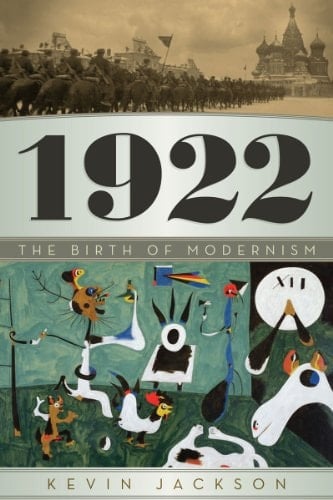
Author Description
The year that begat modernism―from the publication of Ulysses and The Waste Land and the creative explosion of jazz and surrealism, to Mussolini’s creation of the first authoritarian state and the birth of the Soviet Union. For a literary historian of the twenty-first century, the year 1922 is unquestionably the annus mirabilis of modernism. The greatest English-language novel of the century was published in February 1922: Ulysses by James Joyce. The greatest English-language poem of the century, The Waste Land by T. S. eliot, was published in October. These two titles have come to dominate our sense of what “modernism” in literature means; nothing published in the decades since has even begun to challenge their preeminence. In the year 1922, it now seems, literature changed forever. Then there were all the Americans in pairs: the “Lost Generation,” as Gertrude Stein called them. Hemingway moved there in early 1922, a time immortalized in A Moveable Feast. A heady time, but also a time for mourning. Perhaps the greatest of the native Parisians, Marcel Proust, published the last volume of his epic novel Sodom et Gomorrah and died very shortly afterwards, in November 1922. A small coterie of poets was hatching an entirely new sensibility. The name for this way of thinking, “Surrealisme,” had been coined by a slightly older poet, Guillaume Apollinaire. it is in 1922 that F. Scott Fitzgerald coins the term “the Jazz Age,” for a collection of short stories. He also publishes The Beautiful and Damned. In reality, the new sound of jazz, however exciting, is in no more than a transitional stage from its disregarded bordello roots to its status as a full-grown art form. But 1922 is full of early promise and growth: Louis Armstrong makes his way north to Chicago; Bessie Smith records her first song.... The year ends―almost exactly―with the for
Page Count:
356
Publication Date:
2011-01-01
ISBN-10:
1605981206
ISBN-13:
9781605981208