Author Description
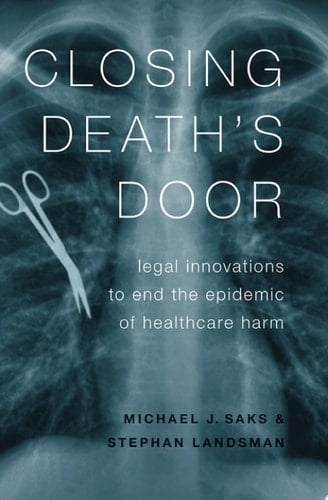
After Heart Disease And Cancer, The Third Leading Cause Of Death In The United States Is Iatrogenic Injury (avoidable Injury Or Infection Caused By A Healer). Research Suggests That Avoidable Errors Claim Several Hundred Thousand Lives Every Year. The Principal Economic Counterforce To Such Errors, Malpractice Litigation, Has Never Been A Particularly Effective Deterrent For A Host Of Reasons, With Fewer Than 3% Of Negligently Injured Patients (or Their Families) Receiving Any Compensation From A Doctor Or Hospital's Insurer. Closing Death's Door Brings The Psychology Of Decision Making Together With The Law To Explore Ways To Improve Patient Safety And Reduce Iatrogenic Injury, When Neither The Healthcare Industry Itself Nor The Legal System Has Made A Substantial Dent In The Problem. Beginning With An Unflinching Introduction To The Problem Of Patient Safety, The Authors Go On To Define Iatrogenic Injury And Its Scope, Shedding Light On The Culture And Structure Of A Healthcare Industry That Has Failed To Effectively Address The Problem-and Indeed That Has Influenced Legislation To Weaken Existing Legal Protections And Impede The Adoption Of Potentially Promising Reforms. Examining The Weak Points In Existing Systems With An Eye To Using Law To More Effectively Bring About Improvement, The Authors Conclude By Offering A Set Of Ideas Intended To Start A Conversation That Will Lead To New Legal Policies That Lower The Risk Of Harm To Patients. Closing Death's Door Is Brought To Vivid Life By The Stories Of Individuals And Groups That Have Played Leading Roles In The Nation's Struggle With Iatrogenic Injury, And Is Essential Reading For Medical And Legal Professionals, As Well As Lawmakers And Laypeople With An Interest In Healthcare Policy.
Menrva's Summary
THE THESIS
This book investigates the systemic failure of the healthcare and legal industries to mitigate iatrogenic injury, which stands as the third leading cause of death in the United States. Michael J. Saks and Stephan Landsman, both experts in law and psychology, synthesize empirical research on medical error with an analysis of current litigation frameworks. They argue that malpractice law has failed as a deterrent and propose a new policy-driven approach to enhance patient safety by addressing the structural and cultural barriers within the medical establishment.
THE SCOPE MAP
What You Will Find
- Analysis of the prevalence and economic impact of iatrogenic injury.
- Examination of the intersection between cognitive psychology and medical decision-making.
- Case studies of individuals and groups involved in the struggle for patient safety reform.
- Proposed legal and policy frameworks to reduce medical harm.
Scope Limits
- The text does not provide a comprehensive clinical manual for medical practitioners.
- It does not offer a step-by-step guide for individuals currently pursuing active malpractice litigation.
THE AUTHORITY PERSPECTIVE
Experts and legal scholars recognize this work as a critical examination of the limitations of the current tort system in addressing medical negligence. Readers frequently note the academic rigor of the authors' arguments and their ability to bridge the gap between complex legal theory and practical healthcare policy.
Page Count:
328
Publication Date:
2020-01-01
ISBN-10:
0190667990
ISBN-13:
9780190667993
Healthcare Policy
Public Health
Patient Safety
Medical Law
Legal Studies
Sociology