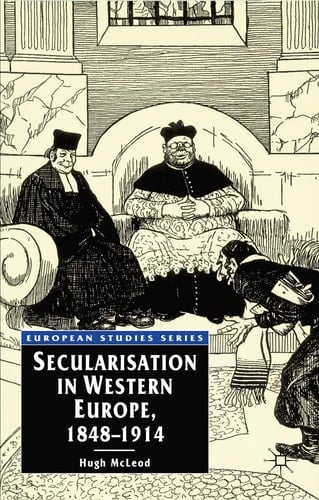
Author Description
"In this detailed study, Hugh McLeod deals with causes and consequences of secularisation - political, social and cultural. Beginning with politics, McLeod assesses the French Third Republic, the classic example of the systematic secularisation of public institutions. But even in France the secular state was opposed by a powerful Catholic counter-culture, and in Germany and England ties between church and state remained much closer. In his examination of the part played by different social groups McLeod considers how the religious attitudes of workers differed from those of the middle class; how women differed from men, and Catholics from Protestants or Jews. Changes in individual belief and practice are also examined: during this period, European societies were religiously polarised, with some regions (such as Brittany) remaining bastions of traditional religion, while others (such as the Limousin) became strongholds of secularism. The author also considers questions of identity, how far older religious identities were replaced by nationalist or socialist identities, and looks at the impact of industrialisation, urbanisation and compulsory education on religious beliefs and practices once deeply rooted in western European popular cultures. Finally, the varying response to the outbreak of war in 1914 offers a test of the extent - and the limits - of secularisation in these three countries."--BOOK JACKET.
Page Count:
387
Publication Date:
2000-08-11
ISBN-10:
0333597486
ISBN-13:
9780333597484