Author Description
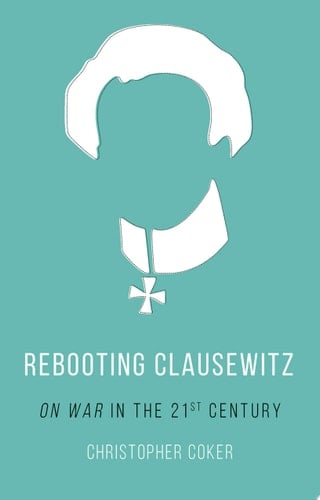
Rebooting Clausewitz offers an entirely new take on the work of history's greatest theorist of war. Written for an undergraduate readership that often struggles with Clausewitz's master work On War--a book that is often considered too philosophical and impenetrably dense--it seeks to unpack some of Clausewitz's key insights on theory and strategy. In three fictional interludes Clausewitz attends a seminar at West Point; debates the War on Terror at a Washington think tank; and visits a Robotics Institute in Santa Fe where he discusses how scientists are reshaping the future of war. Three separate essays situate Clausewitz in the context of his times, discuss his understanding of the culture of war, and the extent to which two other giants--Thucydides and Sun Tzu--complement his work. Some years ago the philosopher W.B. Gallie argued that Clausewitz needed to be 'saved from the Clausewitzians'. Clausewitz doesn't need saving and his commentators have contributed a great deal to our understanding of On War's seminal status as a text. But too often they tend to conduct a conversation between themselves. This book is an attempt to let a wider audience into the conversation.
Menrva's Summary
THE THESIS
This book investigates how the foundational strategic theories of Carl von Clausewitz remain relevant and applicable to the complexities of modern twenty-first-century warfare. Christopher Coker, a professor of international relations, utilizes a hybrid approach to demystify Clausewitz’s dense philosophical work, On War. By blending academic analysis with creative scenarios, the author argues that Clausewitz’s insights on the nature of conflict are not relics of the past but essential tools for understanding contemporary geopolitical and technological shifts.
THE SCOPE MAP
What You Will Find
- Three fictional narrative interludes featuring Clausewitz in modern settings like West Point and a Robotics Institute.
- Comparative analysis between Clausewitz, Thucydides, and Sun Tzu.
- Historical context regarding the cultural evolution of warfare.
Scope Limits
- The text does not provide a comprehensive line-by-line commentary of the original On War.
- It does not focus on specific tactical manuals or current military hardware specifications.
THE AUTHORITY PERSPECTIVE
Critics and scholars appreciate the book for its accessibility, noting that it successfully bridges the gap between dense military theory and undergraduate-level comprehension. Experts highlight the work as a useful pedagogical tool for those seeking to apply classical strategic thought to modern technological and political challenges.
Page Count:
184
Publication Date:
2017-01-01
ISBN-10:
0190862653
ISBN-13:
9780190862657
History
Military History
Philosophy of
WAR PHILOSOPHY
Military Strategy
International relations