Author Description
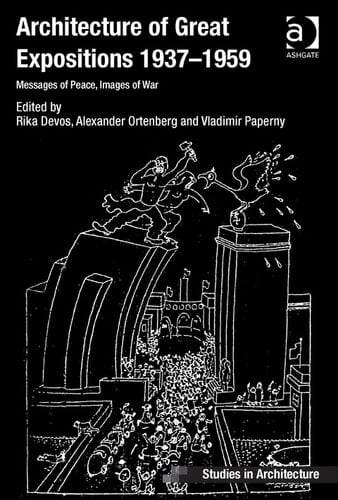
This book investigates architecture as a form of diplomacy in the context of the Second World War at six major European international and national expositions that took place between 1937 and 1959. The volume gives a fascinating account of architecture assuming the role of the carrier of war-related messages, some of them camouflaged while others quite frank. The famous standoffs between the Stalinist Russia and the Nazi Germany in Paris 1937, or the juxtaposition of the USSR and USA pavilions in Brussels 1958, are examples of very explicit shows of force. The book also discusses some less known - and more subtle - messages, revealed through an examination of several additional pavilions in both Paris and Brussels
Page Count:
256
Publication Date:
2015-01-01
ISBN-10:
1472434625
ISBN-13:
9781472434623
Community Tags
Reader Comments
Share Your Thoughts
No comments yet. Be the first to share your thoughts!