Author Description
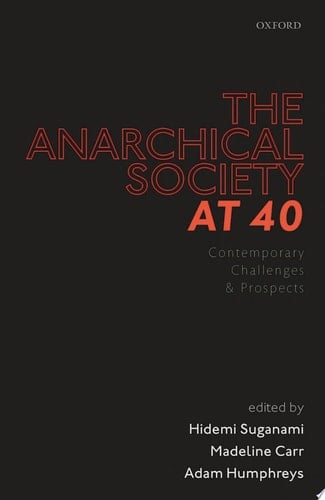
Hedley Bull's The Anarchical Society Was Published In 1977. Forty Years On, It Is Considered One Of The Classic Texts In International Relations. It Does Not, However, Address Many World Political Issues That Now Concern Us Deeply, Such As Terrorism, Global Financial Crises, Climate Change, The Impact Of The Internet Revolution, Deep-rooted Racial Inequalities, And Violence Against Women. Moreover, While The Development Of International Relations As An Academic Subject Has Consolidated The Status Of The 'english School' As One Of The Principal Approaches To The Study Of World Politics, And The Anarchical Society As Its Key Text, Significant Limitations In Bull's Approach Have Also Been Identified. This Volume Examines How Far The Anarchical Society Continues To Illuminate World Politics And How Well Bull's Method And Argument Stand Up Today. The Volume Argues That Although Many Of Bull's Substantive Judgements Require Updating, His Approach Remains Valuable, Not Only For Thinking About Enduring Problems Of Violence And Security, But Also, As A Starting Point, For Thinking About Many Issues That Bull Himself Neglected. However, The Contributors Also Develop Important Criticisms Of Bull's Approach And Identify Ways In Which It Could Be Strengthened. A Key Insight Is That Although The Anarchical Society Is Famous For Explicating The Concept Of 'international Society', There Is More To It Than That. Indeed, The Contemporary Relevance Of Bull's Work Is Clearest When We Recognize The Often Overlooked Potential Of His Concept Of The 'world Political System', Referring To The Global Network Of Interactions Of Which Modern International Society Is Only A Part.
Menrva's Summary
THE THESIS
This volume investigates the contemporary relevance and limitations of Hedley Bull's seminal 1977 text, The Anarchical Society, in the context of modern global political challenges. The editors, Adam R. C. Humphreys, Madeline Carr, and Hidemi Suganami, curate a collection of scholarly essays that evaluate whether Bull's theoretical framework remains applicable to issues like climate change, digital transformation, and systemic inequality. By contrasting Bull's original arguments with current geopolitical realities, the contributors assess the enduring utility of the 'English School' approach to international relations.
THE SCOPE MAP
What You Will Find
- Critical re-evaluation of the 'international society' and 'world political system' concepts.
- Analysis of modern issues including terrorism, financial crises, and racial inequality.
- Scholarly debate regarding the methodological strengths and weaknesses of Bull's original work.
Scope Limits
- The text does not provide a comprehensive history of the English School beyond its relation to Bull's specific arguments.
- It does not offer a predictive model for future global political developments.
THE AUTHORITY PERSPECTIVE
Experts and scholars in the field of international relations recognize this volume as a critical companion to Bull's original work, particularly for those studying the evolution of the English School. Readers frequently note the academic density of the prose, which is intended for advanced students and researchers of political theory.
Page Count:
368
Publication Date:
2017-01-01
ISBN-10:
0191085111
ISBN-13:
9780191085116
Political Theory
International relations
Academic