Author Description
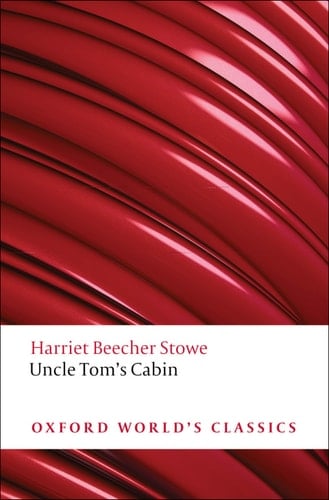
So you're the little woman who wrote the book that started this great war!' These words, said to have been uttered by Abraham Lincoln, signal the celebrity of Uncle Tom's Cabin. The first American novel to become an international best-seller, Stowe's novel charts the progress from slavery to freedom of fugitives who escape the chains of American chattel slavery, and of a martyr who transcends all earthly ties. At the middle of the nineteenth-century, the names of its characters - Little Eva, Topsy, Uncle Tom - were renowned. A hundred years later, `Uncle Tom' still had meaning, but, to Blacks everywhere it had become a curse. This edition firmly locates Uncle Tom's Cabin within the context of African-American writing, the issues of race and the role of women. Its appendices include the most important contemporary African-American literary responses to the glorification of Uncle Tom's Christian resignation as well as excerpts from popular slave narratives, quoted by Stowe in her justification of the dramatization of slavery, Key to Uncles Tom's Cabin. ABOUT THE SERIES: For over 100 years Oxford World's Classics has made available the widest range of literature from around the globe. Each affordable volume reflects Oxford's commitment to scholarship, providing the most accurate text plus a wealth of other valuable features, including expert introductions by leading authorities, helpful notes to clarify the text, up-to-date bibliographies for further study, and much more.
Menrva's Summary
THE PULSE
The narrative follows the disparate paths of enslaved individuals seeking liberation and the moral consequences faced by those who uphold the institution of chattel slavery. The protagonist, Uncle Tom, remains a steadfast figure whose Christian faith and endurance serve as a counterpoint to the brutality of his captors. The story utilizes a multi-perspective framework to track the escape of fugitives alongside the domestic lives of those trapped within the plantation system. Stowe employs a didactic tone to expose the logical and physical constraints imposed upon enslaved people in the mid-nineteenth century United States.
INSIDE THE PAGES
- Episodic structure tracking multiple character arcs
- Moralistic and sentimental prose style
- Direct address to the reader regarding social issues
- Contrast between Northern and Southern societal values
- Integration of religious allegory and martyrdom
- Detailed depictions of the domestic sphere
- Use of dialect to differentiate character backgrounds
- Focus on the legal and physical realities of chattel slavery
THE COLLECTIVE ECHO
Discussion often centers on the historical impact of the novel as a catalyst for abolitionist sentiment in the United States. Readers frequently highlight the stark contrast between the author's original intent to humanize enslaved people and the later evolution of the title character's name into a pejorative term. Critics often analyze the effectiveness of the book's sentimental rhetoric in mobilizing public opinion during the nineteenth century. The work remains a focal point for academic study regarding the intersection of race, gender, and religious morality in American literature.
Page Count:
576
Publication Date:
1998-01-01
ISBN-10:
0191506001
ISBN-13:
9780191506000
classic
African Americans
Fiction political
Social Commentary
Historical
19th Century
Slavery
English
Southern States
English & College Success