Author Description
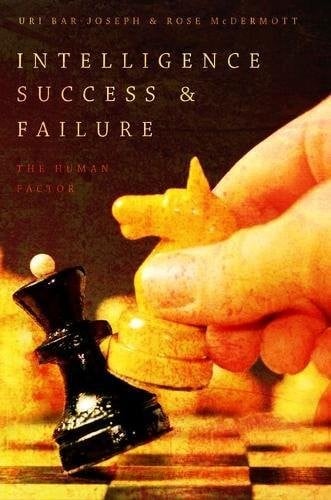
"The study of strategic surprise has consistently concentrated on important failures that resulted in catastrophes such as Pearl Harbor, Barbarossa, and the September 11th attack. Intelligence Success and Failure challenges the assertion that such failures result from defective information-processing systems. Further, it approaches this topic uniquely by highlighting the successful cases of strategic surprise, as well as the failures, from a psychological perspective. This book delineates the critical role of individual psychopathologies in precipitating failure by investigating important historical cases. Uri Bar-Joseph and Rose McDermott use six military attacks as examples for their analysis, including: "Barbarossa," the June 1941 German invasion of the USSR (failure); the fall-winter 1941 battle for Moscow (success); the Arab attack on Israel on Yom Kippur 1973 (failure); and the second Egyptian offensive in the war six days later (success). From these specific cases and others, Bar-Joseph and McDermott analyze the psychological mechanisms through which leaders assess their own fatal mistakes and use the intelligence available to them. They examine the factors that contribute to failure and success in responding to strategic surprise and identify the learning process that central decision makers engage with for subsequent successes. Intelligence Success and Failure presents a new theory in the study of strategic surprise that claims the key explanation for warning failure is not unintentional action, but rather, motivated biases in key intelligence and central leaders that null any sense of doubt prior to surprise attacks"--
Page Count:
262
Publication Date:
2017-01-01
ISBN-10:
0199341737
ISBN-13:
9780199341733
Science
Psychology