Author Description
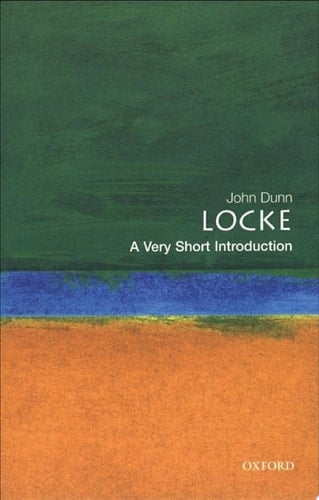
John Locke (1632-1704) one of the greatest English philosophers of the late seventeenth and early eighteenth century, argued in his masterpiece, An Essay Concerning Human Understanding, that our knowledge is founded in experience and reaches us principally through our senses; but its message has been curiously misunderstood. In this book John Dunn shows how Locke arrived at his theory of knowledge, and how his exposition of the liberal values of toleration and responsible government formed the backbone of enlightened European thought of the eighteenth century. ABOUT THE SERIES: The Very Short Introductions series from Oxford University Press contains hundreds of titles in almost every subject area. These pocket-sized books are the perfect way to get ahead in a new subject quickly. Our expert authors combine facts, analysis, perspective, new ideas, and enthusiasm to make interesting and challenging topics highly readable.
Menrva's Summary
THE THESIS
This book investigates the philosophical contributions of John Locke, specifically addressing how his theories on human understanding and liberal governance shaped the intellectual landscape of the Enlightenment. John Dunn, a scholar of political theory, utilizes historical context and textual analysis of Locke's primary works to clarify common misconceptions regarding his epistemology. The text argues that Locke's focus on sensory experience and his advocacy for toleration and limited government remain central to modern political thought.
THE SCOPE MAP
What You Will Find
- Analysis of An Essay Concerning Human Understanding
- Examination of Locke's theories on knowledge and experience
- Overview of Locke's influence on eighteenth-century European political values
- Contextualization of Locke's life within the seventeenth-century intellectual climate
Scope Limits
- Does not provide a comprehensive biography of Locke's personal life
- Does not offer an exhaustive critique of all subsequent philosophical responses to Locke
THE AUTHORITY PERSPECTIVE
Experts and readers frequently note that this text serves as a concise, accessible entry point for those unfamiliar with Locke's complex philosophical framework. It is widely regarded as a reliable, high-level synthesis suitable for students and general readers seeking to understand the foundations of liberal political theory.
Page Count:
144
Publication Date:
2003-01-01
ISBN-10:
0191577855
ISBN-13:
9780191577857
Biography
History
Philosophy
History & Surveys
Epistemology