Author Description
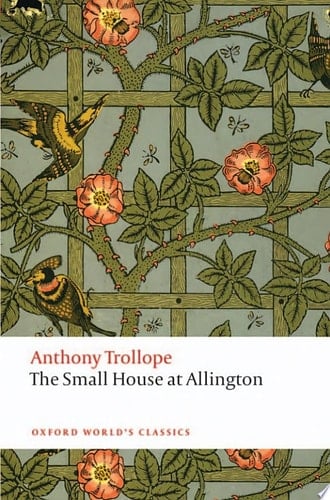
She had resolved to trust in everything, and, having so trusted, she would not provide for herself any possibility of retreat. Lively and attractive, Lily Dale lives with her mother and sister at the Small House at Allington. She falls passionately in love with the urbane Adolphus Crosbie, and is devastated when he abandons her for the aristocratic Lady Alexandrina de Courcy. But Lily has another suitor, Johnny Eames, who has been devoted to her since boyhood. Perhaps she can find renewed happiness in Johnny's courtship? The Small House at Allington was among the most successful of Trollope's Barsetshire novels, and has retained its popularity among modern readers. Lily Dale's stubborn constancy is a troubling reflection of Trollope's divided feelings about the need for progress and reform in the context of liberal thought and politics. Her story is a subtle exploration of loyalty and ambition, and the pressure for change in a rapidly evolving world.
Menrva's Summary
THE PULSE
The central conflict ignites when Lily Dale, a young woman of modest means, is abruptly abandoned by her fiancé, Adolphus Crosbie, for a more socially advantageous match. Lily must navigate the social fallout of this public rejection while managing the persistent, long-standing affection of her childhood friend, Johnny Eames. The narrative operates within the rigid social hierarchies of mid-19th-century England, where marriage serves as both a personal union and a mechanism for economic stability. Trollope employs a third-person omniscient perspective to examine the internal motivations and external pressures acting upon the inhabitants of Allington and the wider Barsetshire society.
INSIDE THE PAGES
- Detailed exploration of Victorian social etiquette and courtship rituals
- Satirical portrayal of aristocratic pretension and social climbing
- Examination of the tension between individual desire and familial duty
- Character-driven narrative focusing on moral integrity and emotional resilience
- Use of irony to highlight the hypocrisy of the landed gentry
- Multi-layered subplots involving local clergy and minor nobility
- Focus on the psychological impact of public scandal in a small community
- Realistic depiction of the economic constraints facing unmarried women
THE COLLECTIVE ECHO
Discussion often centers on the character of Lily Dale, whose steadfastness is frequently debated as either a virtue or a form of self-imposed suffering. Readers highlight the balance between the lighthearted social commentary and the underlying melancholy of the protagonist's situation. Critics frequently note Trollope's ability to render the mundane aspects of provincial life with significant depth and psychological acuity. The pacing is often described as deliberate, allowing for a thorough examination of the characters' evolving motivations over time. Many readers find the exploration of loyalty and ambition to be a central thematic thread that remains relevant despite the historical setting.
Page Count:
592
Publication Date:
2014-01-01
ISBN-10:
0191639788
ISBN-13:
9780191639784
Romance
Victorian
classic
REALISM
Social Satire
Community Tags
More from Barsetshire