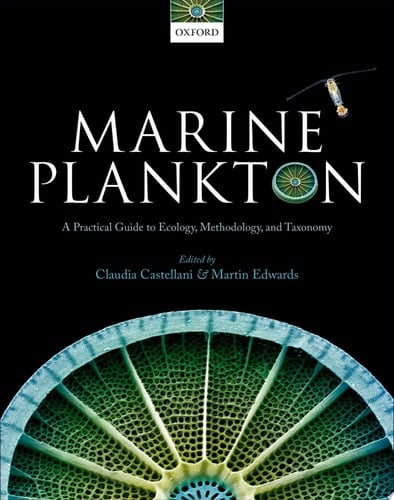
Marine Plankton: A Practical Guide to Ecology, Methodology, and Taxonomy
0
0
Author Description
A thorough understanding of planktonic organisms is the first step towards a real appreciation of the diversity, biology, and ecological importance of marine life. A detailed knowledge of their distribution and community composition is particularly important since these organisms are often very delicate and sensitive to change, and can be used as early indicators of environmental change. Natural and man-induced modification of the environment can affect both the distribution and composition of plankton, with important ecological and economic impacts. Marine Plankton provides a practical guide to plankton biology with a large geographic coverage spanning the North Sea to the north-eastern Atlantic coast of the USA and Canada. The book is divided into three sections: an overview of plankton ecology, an assessment of methodology in plankton research covering sampling, preservation, and counting of samples, and a taxonomic guide richly illustrated with detailed line drawings to aid identification. This is an essential reference text suitable for senior undergraduate and graduate students taking courses in marine ecology (particularly useful for fieldwork) as well as for professional marine biologists. It will also be of relevance and use to environmental scientists, conservation biologists, marine resource managers, environmental consultants, and other specialised practitioners.
Menrva's Summary
THE THESIS
This text serves as a comprehensive manual for the study of planktonic organisms, addressing the critical need for standardized methodology and taxonomic identification in marine ecological research. Authors Claudia Castellani and Martin Edwards leverage their expertise to synthesize complex biological data into a functional resource. The book establishes a framework for understanding how plankton distribution serves as a bio-indicator for environmental health, bridging the gap between theoretical ecology and field-based research practices.
THE SCOPE MAP
What You Will Find
- An overview of plankton ecology and community dynamics
- Methodologies for sampling, preservation, and quantitative analysis
- A taxonomic guide featuring detailed line drawings for identification
- Geographic coverage spanning the North Sea to the North Atlantic
Scope Limits
- Does not provide exhaustive global coverage, focusing primarily on North Atlantic regions
- Excludes advanced molecular genetic analysis techniques in favor of traditional morphological identification
THE AUTHORITY PERSPECTIVE
Experts and academics identify this work as a foundational reference for students and professionals engaged in marine fieldwork. Readers frequently note the clarity of the taxonomic illustrations and the practical utility of the methodological sections for environmental monitoring.
Page Count:
704
Publication Date:
2017-01-01
ISBN-10:
0192512765
ISBN-13:
9780192512765
Science
Ecology
Reference
Taxonomy
Zoology
Marine Biology
Oceanography