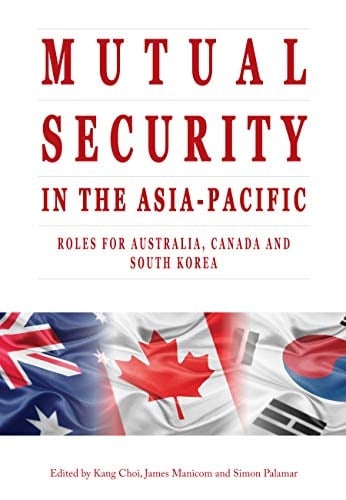
Mutual Security in the Asia-Pacific Roles for Australia, Canada and South Korea
0
0
Author Description
If the twenty-first century is to be "Asia's century," what are the roadblocks that Asia-Pacific nations must overcome? And what role can countries such as Australia, Canada and South Korea play in the region's rise? Myriad challenges to regional stability and security threaten East Asia's burgeoning growth and prosperity: territorial and maritime boundary disputes, political relations strained by unresolved historical legacies and seemingly intractable disagreements about national sovereignty. Some security threats cannot be mitigated or solved by military force. Climate change driven natural disasters, declining fish stocks, volatile crop yields and food prices, and the rapid pace of urbanization could each slow the region's remarkable upward trajectory. Canada, Australia and South Korea are united by a shared awareness that their futures are intimately tied to East Asia's. How will these "constructive powers"--countries of significant size and influence that seek to protect their own interests while taking into account their effect on other countries--address the economic and security challenges that loom in the Asia-Pacific? Which parts of the governance system that has served so well since World War II should be preserved. And which should be changed to recognize East Asia's hard-won political and economic influence, while helping to ensure a stable, predictable political environment? <i>Mutual Security in the Asia-Pacific</i> offers responses to these questions, presenting a number of policy-relevant ideas, with a particular emphasis on the potential for Australia, Canada and South Korea to take an active role in the region.
Page Count:
199
Publication Date:
2015-01-01
ISBN-10:
1928096131
ISBN-13:
9781928096139