Author Description
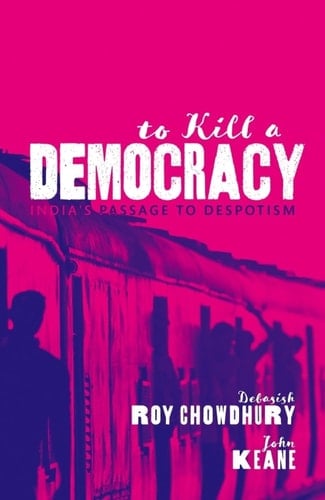
India is heralded as the world's largest democracy. Yet, there is now growing alarm about its democratic health. To Kill a Democracy gets to the heart of the matter. Combining poignant life stories with sharp scholarly insight, it rejects the belief that India was once a beacon of democracy but is now being ruined by the destructive forces of Modi-style populism. The book details the much deeper historical roots of the present-day assaults on civil liberties and democratic institutions. Democracy, the authors also argue, is much more than elections and the separation of powers. It is a whole way of life lived in dignity, and that is why they pay special attention to the decaying social foundations of Indian democracy. In compelling fashion, the book describes daily struggles for survival and explains how lived social injustices and unfreedoms rob Indian elections of their meaning, while at the same time feeding the decadence and iron-fisted rule of its governing institutions. Much more than a book about India, To Kill A Democracy argues that what is happening in the country is globally important, and not just because every third person living in a democracy is an Indian. It shows that when democracies rack and ruin their social foundations, they don't just kill off the spirit and substance of democracy. They lay the foundations for despotism.
Menrva's Summary
THE THESIS
This book investigates the systemic erosion of democratic institutions in India, questioning whether the nation's current political trajectory represents a departure from its democratic roots or the culmination of long-standing social inequalities. Authors Debasish Roy Chowdhury and John Keane, a journalist and a political theorist respectively, utilize a combination of ethnographic case studies and historical analysis to argue that the decline of Indian democracy is rooted in the failure to address fundamental social injustices rather than solely the rise of contemporary populist leadership.
THE SCOPE MAP
What You Will Find
- Analysis of the historical and social foundations of Indian governance
- Examination of the relationship between social inequality and institutional decay
- Qualitative narratives detailing the lived experiences of Indian citizens
- Theoretical framework connecting social health to the viability of democratic systems
Scope Limits
- Does not provide a comprehensive biography of specific political leaders
- Does not focus on international geopolitical relations outside the context of domestic democratic health
THE AUTHORITY PERSPECTIVE
Critics and scholars frequently note the book's departure from standard political analysis by centering the human cost of institutional failure. Experts highlight this as a significant contribution to the study of global democratic backsliding, noting the authors' ability to bridge academic theory with accessible, on-the-ground reporting.
Page Count:
326
Publication Date:
2021-01-01
ISBN-10:
0192588273
ISBN-13:
9780192588272
History
India
Government
Sociology
Democracy