Author Description
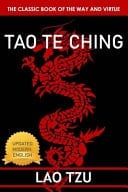
Limited Time Promotional Offer Tao Te Ching - The Classic Book of The Way And Virtue The Tao-Te-Ching is an anti-authoritarian treatise which posits that the way of virtue lies in non-action (Wu Wei) through a recognition of the natural, universal force known as the Tao. The Tao flows without effort and, like water, goes where it will without striving and effects change and growth. To be virtuous, one should emulate the Tao and engage in non-action (not forcing an effect or outcome). Human-made laws, it claims, cannot make one virtuous and cannot contribute to good behavior, inner peace, or empathy with others because they are not in tune with nature. It is only by recognizing the Tao, and one's connection to it and all things, that one may achieve these goals. To recognize the Tao, one must know what it is, and so it is defined in the first chapter: The Tao (The Way) that can be spoken of is not the Constant Tao; The name that can be named is not a Constant Name. Nameless, is the origin of Heaven and Earth; The named is the Mother of all things. Thus, the constant void enables one to observe the true essence. The constant being enables one to see the outward manifestations. These two come paired from the same origin. But when the essence is manifested, it has a different name. This same origin is called "The Profound Mystery." As profound the mystery as it can be, It is the Gate to the essence of all life. Lao Tzu: The Old Master Lao Tzu was an ancient Chinese philosopher and poet, well-known for penning the book Tao Te Ching. He was the founder of philosophy of Taoism, a religious and ethical custom of ancient China. He is largely respected as a religious deity in various traditional Chinese religious schools of thought. He is also believed by some to be an older contemporary of the famous philosopher Confucius. The 'Tao Te Ching', literally meaning 'The Wa
Page Count:
108
Publication Date:
2021-02-10
ISBN-10:
1469904969
ISBN-13:
9798707514814