Author Description
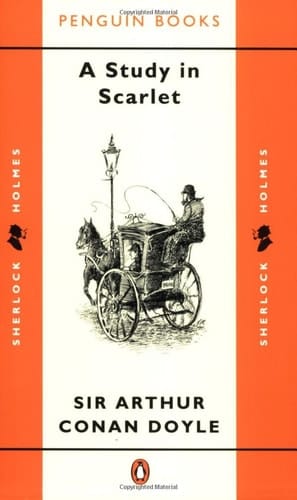
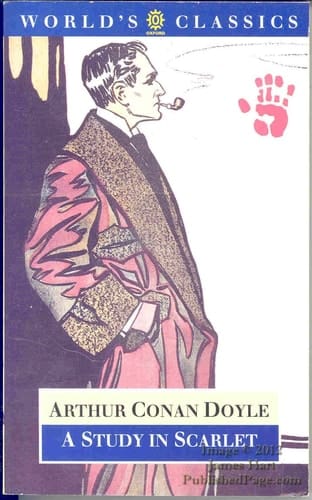
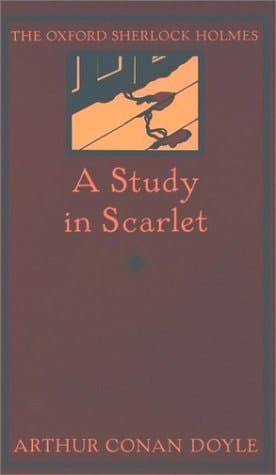
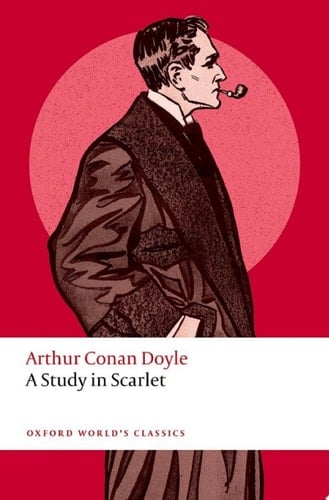
'There's the scarlet thread of murder running through the colourless skein of life.' In Arthur Conan Doyle's A Study in Scarlet a popular cultural phenomenon is born. We meet two of the most famous characters in modern literary history: the consulting detective Sherlock Holmes and John Watson, an army doctor home on sick leave, for the first time. Through Watson we learn a little about the eccentric figure who is his new room-mate at 221B Baker Street, before they encounter their first case: an American visitor to the city has been killed in an empty house off the Brixton Road, and the only clue the police have is the mysterious word 'Rache', scrawled in blood-red letters on the wall. As Holmes sets to work with his unique forensic methods, behind the murder a tangled skein of love, religion, and revenge gradually unwinds, taking us from the streets of London to the Utah Territory, and back again. As Nicholas Daly's Introduction describes, out of this gripping tale grew the Holmes and Watson stories that would make Conan Doyle the best-paid author of his time. His creations have become household words, inspiring not only countless adaptations and imitations, but a Sherlock Holmes museum, Sherlock Holmes-themed pubs, and a whole array of Holmesian merchandise, from cushions to jigsaw puzzles. Here, though, we meet Holmes and Watson before they became famous, and we can see how their extraordinary impact on our popular culture derives from the late-Victorian world from which they emerge.
Menrva's Summary
THE PULSE
A mysterious murder in an empty London house forces a newly acquainted pair to apply unconventional logic to a seemingly impossible crime. Dr. John Watson, recently returned from military service, finds himself sharing quarters with the eccentric and analytical Sherlock Holmes at 221B Baker Street. When a body is discovered with the word 'Rache' written in blood, the duo is thrust into a complex investigation that spans from the fog-filled streets of London to the American West. The narrative utilizes a dual-perspective structure, with Watson serving as the chronicler of Holmes's deductive process while the second half shifts to a historical account of the events leading to the crime.
INSIDE THE PAGES
- Introduction of the consulting detective archetype
- First-person narration through the perspective of Dr. John Watson
- Forensic methodology applied to criminal investigation
- Non-linear narrative structure shifting between London and Utah
- Exploration of themes involving religious extremism and vengeance
- Detailed depiction of late-Victorian urban atmosphere
- Character study of the Holmes-Watson dynamic
- Use of cryptic clues to drive the investigative plot
THE COLLECTIVE ECHO
Readers frequently highlight the significance of this work as the foundational text for the entire Sherlock Holmes canon. Discussion often centers on the stark contrast between the clinical, analytical nature of Holmes and the more grounded, observant perspective of Watson. Critics often note the unusual structure of the novel, which dedicates a substantial portion of its length to a backstory set in the American frontier. Many readers appreciate the historical context provided by the Oxford World's Classics edition, which helps situate the narrative within the late-Victorian era. The pacing is often described as deliberate, focusing more on the mechanics of deduction than on high-octane action sequences.
Page Count:
192
Publication Date:
2023-01-01
ISBN-10:
0192598031
ISBN-13:
9780192598035
Crime
Mystery
Victorian
classic
Fairy Tales
Detective
Mystery fiction
Watson john h fictitious character fiction
England
Community Tags
More from Sherlock Holmes