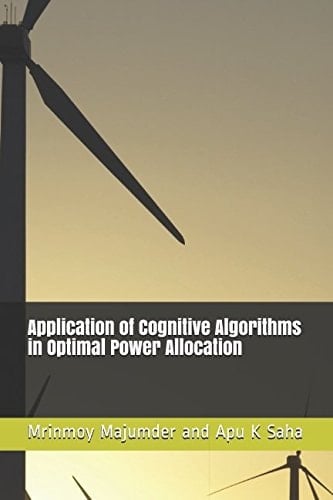
The distribution of available energy must be in such a way that the need of the consumer can be satisfied. But if availability of resources is not sufficient to satisfy the demand of consumers selection of consumer has to be carried out based on socio-economic impact of the consumer. Proper weightage that can separate different types of consumers based on their importance has to be prepared and cognitive optimization of the allocation may be carried out so that even in the days of scarcity the socio-economical impact for not satisfying the need of the consumers can be minimized. In this aspect the present investigation utilized the advantage of fuzzy logic to assign weigtage to in-house consumers of an educational campus and then tried for optimal allocation by applying the non-linearity mapping capability of neuro-genetic algorithms. The output from the algorithm was compared with similar output from Particle Swarm Optimization and Differential Evolution Algorithms. The study results provided an option for optimal utilization of available energy based on the socio-economic importance of consumers.
Page Count:
41
Publication Date:
2017-05-01
Community Tags
Reader Comments
Share Your Thoughts
No comments yet. Be the first to share your thoughts!