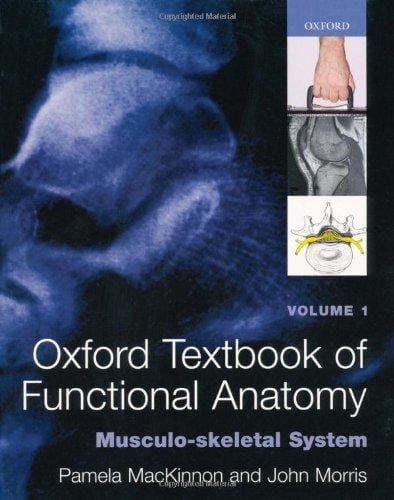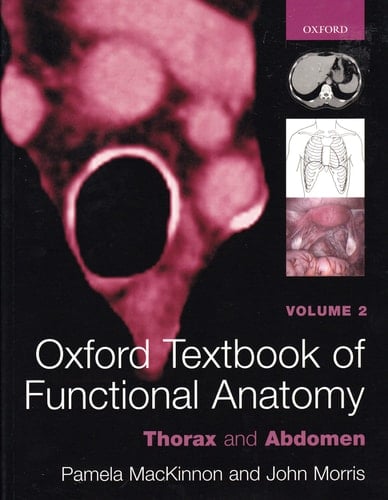
Oxford Textbook of Functional Anatomy: Volume 2: Thorax and Abdomen
Book 2 of 5 in the Oxford Textbook of Functional Anatomy series
0
0
Author Description
Despite changes in the undergraduate medical curriculum, a sound understanding of how the body is built and functions remains fundamental to all aspects of medicine, not least the interpretation of the products of the new imaging systems. Most diagnoses have to be arrived at from an examination of the intact living body and so an understanding of the functional anatomy of the living body and how it should be examined, remains a critical skill for practitioners. The second edition of the Oxford Textbook of Functional Anatomy: Thorax and Abdomen considers changes in the medical curriculum and pays careful attention to whether or not some item of information is likely to be helpful either in aiding the understanding of the principles of body structure or in everyday clinical practice. As a result, all guidance on dissection and the origins and insertions of individual muscles, on which students in the past have spent a disproportionate amount of time, have been largely removed from the text and are indicated instead of the relevant illustrations. Emphasis on the anatomy of the living subject has been increased, and to underline the increasing importance of non-invasive imaging, there are more computerized tomograms and magnetic resonance imaging. Many of these have been merged with the text in addition to separate subsections which present them in ordered sequence.
Menrva's Summary
THE THESIS
This text investigates the necessity of maintaining a robust understanding of functional human anatomy as a foundational skill for modern clinical practice and diagnostic imaging. The authors, John F. Morris and Pamela C. B. MacKinnon, argue that medical education must pivot away from rote memorization of dissection details toward a functional, living-body perspective. By integrating contemporary imaging technologies with anatomical principles, the text provides a framework for interpreting clinical data in the context of the intact human body.
THE SCOPE MAP
What You Will Find
- Detailed functional anatomy of the thorax and abdomen.
- Integration of computerized tomography (CT) and magnetic resonance imaging (MRI) scans.
- Clinical applications of anatomical knowledge for diagnostic purposes.
Scope Limits
- Excludes traditional, exhaustive guides on dissection procedures.
- Omits detailed lists of muscle origins and insertions previously found in older anatomical texts.
THE AUTHORITY PERSPECTIVE
Medical educators and students frequently cite this text for its successful transition from traditional, dissection-heavy anatomy to a clinically relevant, imaging-focused approach. Experts highlight the book as a practical resource for bridging the gap between theoretical anatomical knowledge and the requirements of modern diagnostic medicine.
Page Count:
250
Publication Date:
2005-06-16
ISBN-10:
0192628178
ISBN-13:
9780192628176
Science
Human Anatomy
textbook
Reference
Anatomy
Medical
Community Tags
More from Oxford Textbook of Functional Anatomy