Author Description
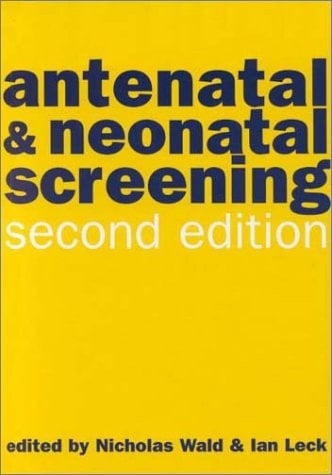
The options in antenatal and neonatal care are legion. Preferences still tend to be subjective. In spite of much publicity that has raised public expectation, an up-to-date thorough evaluation of antenatal and neonatal screening was lacking. TLhis book sets out screening approaches in a quantitative manner and will enable choices to be based on objective evidence of efficacy and, where appropriate, safety. Technical advances have sometimes been introduced uncritically and without adequate assessment. It has been assumed, perhaps naively, that the early detection of abnormality will invariable be a good thing. In this book, there is no such assumption that new tests or technical procedures are useful. They are only considered as a legitimate medical option if they can and have been shown to lead to improvements in outcome.Each disorder is defined and the screening procedure which is designed to identify the disorder critically evaluated. Priority is given to the screening of disorders which lend themselves to effective intervention and practical guidance is provided on how screening should be conducted. Most chapters include a discussion of problem areas and research needs.There are 23 chapters from leading experts from Europe and North America. The book bridges different disciplines concerned with screening and thereby improves the understanding of the subject and will improve delivery of preventive medical services. The book is directed at obstetricians, public health doctors, pediatricians and fetal medicine doctors, epidemiologists, geneticists, health care providers, and administrators.
Menrva's Summary
THE THESIS
This book investigates the efficacy and safety of various antenatal and neonatal screening procedures to determine which medical interventions provide measurable improvements in patient outcomes. Authors Ian Leck and Nicholas J. Wald, alongside a panel of international experts, challenge the assumption that early detection of abnormalities is inherently beneficial. By applying a quantitative framework to clinical screening, the text demands rigorous evidence-based justification for the adoption of new diagnostic technologies in obstetric and pediatric practice.
THE SCOPE MAP
What You Will Find
- Quantitative evaluation of screening approaches for specific neonatal and antenatal disorders.
- Critical analysis of the clinical utility and safety profiles of diagnostic procedures.
- Research-based guidance on the implementation of effective preventive medical services.
Scope Limits
- The text does not cover non-clinical or purely theoretical aspects of fetal development outside of screening contexts.
- It does not provide exhaustive coverage of every rare genetic condition, focusing instead on those where effective intervention is possible.
THE AUTHORITY PERSPECTIVE
Experts recognize this work as a foundational, multi-disciplinary resource for clinicians and public health administrators involved in fetal medicine. Readers frequently note the technical density of the prose, which serves as a rigorous guide for professionals seeking to move beyond subjective preferences in medical screening.
Page Count:
591
Publication Date:
2000-12-15
ISBN-10:
0192628267
ISBN-13:
9780192628268
Genetics
Epidemiology
Medical
Infants newborn
Public Health
OBSTETRICS
PREGNANCY
Pediatrics
Clinical Screening