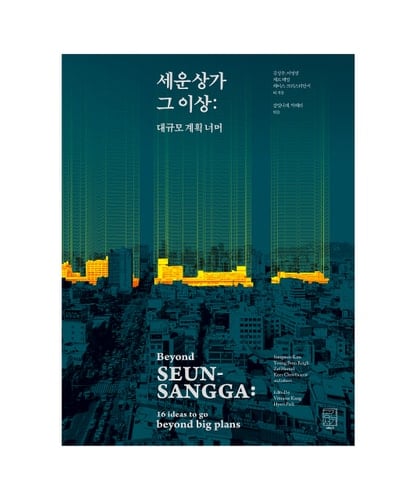
Beyond Seun-sangga: 16 Ideas To Go Beyond Big Plans
0
0
Author Description
This book presents sixteen critical reflections on large-scale urban plans, focusing on the Seunsangga area, in particular, in the midst of Seoul, South Korea. The articles shed light on potential pitfalls of large-scale urban plans and possible alternatives from diverse angles. ‘Seunsangga’ consists of seven commercial-residential, multi-use buildings. As a whole, this 1km-long mega structure stretches from Jongno3-street to Toegye-street in the historic city centre. Being located between Jongmyo shrine and Mountain Nam on a former evacuation site, Seunsangga had enjoyed considerable popularity since its opening in 1968, accommodating the most cutting-edge electronic stores and workshops of that time. However, the fate of Seunssanga soon became grim with the emergence of the South of Han River as a new fast-developing urban core. Different redevelopment plans for Seunsangga were under discussion for nearly three decades, which culminated in the total demolition and reconstruction scheme by the former mayor Oh in 2008. The whole area of 40 hectare was then slated for transforming into a skyscraper area with a central, green park. The new mayor Park has reversed this decision in 2014 to preserve Seunsangga and to enable its surroundings to develop incrementally on a smaller project basis. The previous big plan has passed away. Still, many challenges lie ahead. For instance, dynamic networks of urban light manufacturing industries are on the brink of dissolution, conflicting interests between different stakeholders make even more complex the art of place-making and gentrification is more likely when more public spaces get refurbished. Hence, diverse planning issues addressed by this book are more relevant today than ever, as an engaging future of the Seunsangga area starts from informed decisions that we make today.
Page Count:
336
Publication Date:
2015-01-01
ISBN-10:
1187071005
ISBN-13:
9781187071007