Author Description
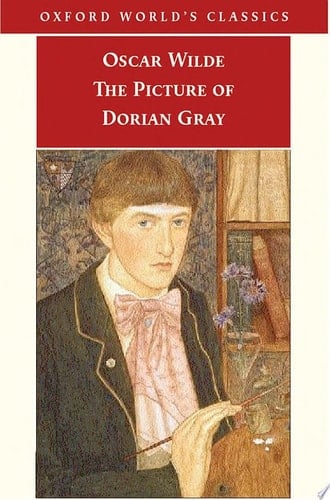
Since its first publication in 1890, Oscar Wilde's only novel, The Picture of Dorian Gray, has remained the subject of critical controversy. Acclaimed by some as an instructive moral tale, it has been denounced by others for its implicit immorality. After having his portrait painted, Dorian Gray is captivated by his own beauty. Tempted by his world-weary friend, decadent friend Lord Henry Wotton, he wished to stay young forever and pledges his very soul to keep his good looks. As Dorian's slide into crime and cruelty progresses, he stays magically youthful, while his beautiful portrait changes, revealing the hideous corruption of moral decay.Set in fin-de-siécle London, the novel traces a path from the studio of painter Basil Howard to the opium dens of the East End. The text of this edition is derived from the Oxford English Texts, which prints a critically established version of the first book edition of 1891. Also included is a new, fuller introduction, which considers the difference between the 1890 and 1891 texts, Wilde's range of sources, significant critical approaches to the novel and its reputation since 1891, full explanatory notes that identify Wilde's sources, and an up-to-date-bibliography.
Menrva's Summary
THE PULSE
A young man’s desperate wish to preserve his youth at the cost of his soul initiates a descent into moral depravity. Dorian Gray, captivated by his own portrait, enters a pact that shifts the physical manifestations of his aging and sins onto the canvas. He is guided by the cynical Lord Henry Wotton, whose hedonistic philosophy challenges Dorian’s initial innocence. The narrative follows Dorian through the social circles and dark corners of Victorian London as he attempts to reconcile his eternal beauty with his increasingly corrupt actions.
INSIDE THE PAGES
- Exploration of aestheticism and hedonism
- Use of the supernatural as a moral mirror
- Third-person limited narrative perspective
- Vivid descriptions of Victorian social settings
- Philosophical dialogue regarding art and morality
- Symbolism of the portrait as a decaying conscience
- Contrast between public reputation and private vice
- Examination of the influence of mentors on identity
THE COLLECTIVE ECHO
Discussion often centers on the tension between Wilde’s aesthetic philosophy and the moral consequences of Dorian’s actions. Readers frequently highlight the sharp, witty dialogue of Lord Henry as a primary driver of the novel’s intellectual appeal. Critics often examine the text as a critique of Victorian hypocrisy and the dangers of unchecked vanity. The atmosphere of the novel is consistently noted for its transition from the bright light of the artist's studio to the shadows of the city's underbelly. Many readers find the evolution of the portrait to be a potent visual representation of the protagonist's internal erosion.
Page Count:
272
Publication Date:
2006-11-06
ISBN-10:
0192807293
ISBN-13:
9780192807298
Horror
Philosophical
classic
Victorian
Gothic