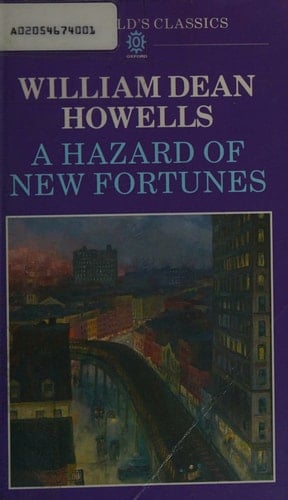
Author Description
Considered Howell's most ambitious novel, A Hazard of New Fortunes portrays nineteenth-century New York as a world of conflicting ideas and values. In the events surrounding the founding of a new magazine, Howell depicts a new urban and industrial America in which people are increasingly driven by forces beyond their control.
Menrva's Summary
THE PULSE
The establishment of a new literary magazine in late nineteenth-century New York acts as the catalyst for a collision between disparate social classes and competing ideologies. Basil March, a man seeking professional reinvention, finds himself navigating the volatile landscape of an industrializing city where economic pressures dictate human interaction. The narrative framework utilizes a panoramic perspective to observe the shifting power dynamics between wealthy capitalists, struggling laborers, and the intellectual elite. Characters are constrained by the rigid social hierarchies of the era and the impersonal forces of a rapidly expanding urban economy.
INSIDE THE PAGES
- Detailed depiction of Gilded Age New York City
- Exploration of the intersection between art and commerce
- Multi-perspective character study
- Focus on the impact of industrialization on individual agency
- Satirical commentary on social climbing and class mobility
- Realistic dialogue reflecting diverse socio-economic backgrounds
- Examination of labor disputes and radical political thought
- Pacing that mirrors the chaotic growth of the urban environment
THE COLLECTIVE ECHO
Readers and critics frequently identify this work as a definitive example of American realism, noting its precise observation of social stratification. Discussion often centers on the effectiveness of the magazine office as a microcosm for the broader tensions within the city. Many observers highlight the author's ability to balance individual character development with a sprawling, systemic critique of urban life. The prose is often described as measured and analytical, providing a clear window into the economic anxieties of the late nineteenth century.
Page Count:
512
Publication Date:
1990-04-19
ISBN-10:
0192827022
ISBN-13:
9780192827029
Historical Fiction
Classic Literature
Social Commentary
Realism
Urban