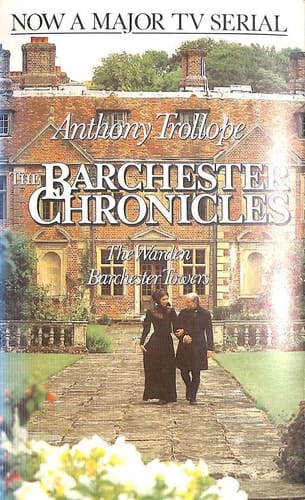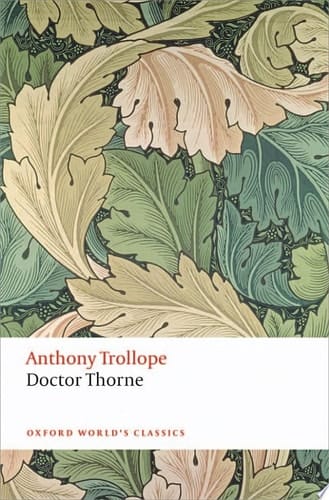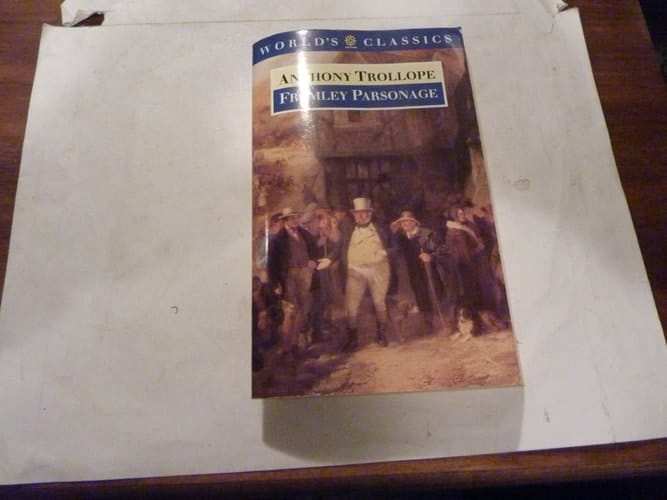
Author Description
'You might pass Eleanor Harding in the street without notice, but you could hardly pass an evening with her and not lose your heart.' John Bold has lost his heart to Eleanor Harding but he is a political radical who has launched a campaign against the management of the charity of which her father is the Warden. How can this tangle be resolved? In the novel which is Trollope's first acknowledged masterpiece, the emotional drama is staged against the background of two major contemporary social issues: the inappropriate use of charitable funds and the irresponsible exercise of the power of the press. A witty love story, in the Jane Austen tradition, this is also an unusually subtle example of 'Condition of England' fiction, combining its charming portrayal of life in an English cathedral close with a serious engagement in larger social and political issues. The Warden is the first of the six books which form Trollope's Barsetshire series of novels. This edition also includes 'The Two Heroines of Plumplington' - the short story which Trollope added, just before his death, to provide a final episode in the annals of Barsetshire. ABOUT THE SERIES: For over 100 years Oxford World's Classics has made available the widest range of literature from around the globe. Each affordable volume reflects Oxford's commitment to scholarship, providing the most accurate text plus a wealth of other valuable features, including expert introductions by leading authorities, helpful notes to clarify the text, up-to-date bibliographies for further study, and much more.
Menrva's Summary
THE PULSE
A young reformer initiates a public campaign against the misuse of charitable funds, inadvertently threatening the livelihood and reputation of the man his beloved daughter calls father. John Bold, a man of radical political convictions, finds his pursuit of social justice in direct conflict with his affection for Eleanor Harding. The narrative follows the internal and external pressures placed upon Septimus Harding, the Warden of Hiram's Hospital, as he navigates the scrutiny of the press and the shifting expectations of the church hierarchy. Trollope employs a third-person omniscient narrator to observe the quiet, structured life of an English cathedral town as it faces the intrusion of modern, aggressive reformist ideals.
INSIDE THE PAGES
- Examination of the ethics of charitable endowments
- Critique of the sensationalist Victorian press
- Exploration of the tension between tradition and progress
- Detailed character studies of the clergy and local gentry
- Use of irony to highlight social hypocrisy
- Focus on the moral dilemmas of the protagonist
- Setting within the fictional ecclesiastical community of Barsetshire
- Integration of romantic subplots with institutional conflict
THE COLLECTIVE ECHO
Readers and critics frequently note the gentle, observational style that characterizes Trollope's approach to social commentary. Discussion often centers on the moral ambiguity of the central conflict, as the author avoids painting the characters in purely black-and-white terms. Many highlight the effectiveness of the cathedral close setting in grounding the broader political themes within a recognizable, intimate environment. The pacing is often described as deliberate and character-driven, prioritizing the psychological state of the Warden over rapid plot progression. This work is widely regarded as a foundational entry point for those interested in the nuances of Victorian social structures and the evolution of the English novel.
Page Count:
137
Publication Date:
2014-01-01
ISBN-10:
0191643327
ISBN-13:
9780191643323
Romance
Classic Literature
Victorian
English
Political fiction
English & College Success
Social Satire
Community Tags
More from Chronicles of Barsetshire