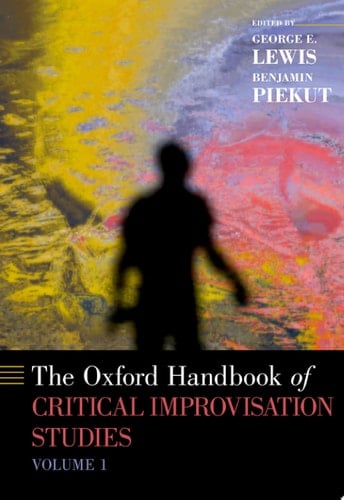
The Oxford Handbook of Critical Improvisation Studies, Volume 1
Book 1 of 30 in the Oxford Handbooks series
0
0
Author Description
Improvisation informs a vast array of human activity, from creative practices in art, dance, music, and literature to everyday conversation and the relationships to natural and built environments that surround and sustain us. The two volumes of the Oxford Handbook of Critical Improvisation Studies gather scholarship on improvisation from an immense range of perspectives, with contributions from more than sixty scholars working in architecture, anthropology, art history, computer science, cognitive science, cultural studies, dance, economics, education, ethnomusicology, film, gender studies, history, linguistics, literary theory, musicology, neuroscience, new media, organizational science, performance studies, philosophy, popular music studies, psychology, science and technology studies, sociology, and sound art, among others.
Menrva's Summary
THE THESIS
This volume investigates the pervasive role of improvisation across human activity, arguing that it functions as a foundational element in creative, social, and environmental systems. Editors Benjamin Piekut and George E. Lewis, both distinguished scholars in musicology and critical studies, curate a multidisciplinary framework that synthesizes research from over sixty contributors to define the scope of improvisation as a field of academic inquiry.
THE SCOPE MAP
What You Will Find
- Cross-disciplinary analysis of improvisation in architecture, neuroscience, and computer science
- Theoretical frameworks connecting artistic performance to everyday social interaction
- Empirical studies on the role of improvisation in organizational and educational settings
Scope Limits
- This volume focuses primarily on theoretical and critical foundations rather than practical instructional guides for performers
- The text does not provide an exhaustive history of specific musical genres, focusing instead on the broader concept of improvisational practice
THE AUTHORITY PERSPECTIVE
Experts identify this work as a foundational text for the study of improvisation, noting its immense breadth and interdisciplinary rigor. Readers frequently highlight the academic density of the prose, which serves as a comprehensive reference for scholars across the humanities and social sciences.
Page Count:
616
Publication Date:
2016-01-01
ISBN-10:
0190627964
ISBN-13:
9780190627966
Philosophy
Humanities
Songwriting
Performance Studies
MUSICOLOGY
Music
Anthropology
Reference
Community Tags
More from Oxford Handbooks