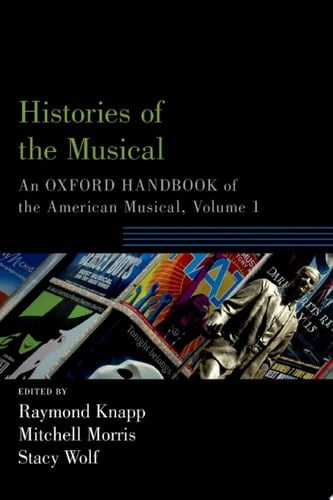
Histories of the Musical: An Oxford Handbook of the American Musical, Volume 1
Book 1 of 30 in the Oxford Handbooks series
0
0
Author Description
The American musical is a paradox. On stage or screen, musicals at once hold a dominant and a contested place in the worlds of entertainment, art, and scholarship. Born from a mélange of performance forms that included opera and operetta, vaudeville and burlesque, minstrelsy and jazz, musicals have always sought to amuse more than instruct, and to make money more than make political change. In spite of their unapologetic commercialism, though, musicals have achieved supreme artistry and have influenced culture as much as if not more than any other art form in America, including avant-garde and high art on the one hand, and the full range of popular and commercial art on the other. Reflecting, refracting, and shaping U.S. culture since the early twentieth century, musicals converse with shifting dynamics of gender and sexuality, ethnicity and race, and the very question of what it means to be American and to be human.The chapters gathered in this book, Volume I of the reissued Oxford Handbook, explore the American musical from both the outside and the inside. This first volume concentrates in particular on large-scale, more philosophical issues of relevance to the genre, considering issues of historical situations and formal procedure as they bear on the narratives we make concerning productions and performers, artists and audiences, commerce and context. The first four essays discuss ways of defining histories and texts, and apprehending the formal choices of singers and dancers; the second group of four take up the subtle challenges of the genre's signal transformations out of minstrelsy and Tin Pan Alley to "integration" and beyond.
Menrva's Summary
THE THESIS
This volume investigates the paradox of the American musical as a commercially driven art form that simultaneously exerts profound influence on cultural identity and social discourse. The editors, Mitchell Morris, Raymond Knapp, and Stacy Ellen Wolf, curate a collection of scholarly essays that examine the genre's evolution from its roots in vaudeville and minstrelsy to its status as a central pillar of American entertainment. The text employs a multi-disciplinary framework to analyze how musicals reflect and shape shifting dynamics of race, gender, and national identity.
THE SCOPE MAP
What You Will Find
- Historical analysis of the transition from early performance forms like operetta and burlesque to the integrated musical.
- Theoretical frameworks for defining musical histories and interpreting formal artistic choices.
- Examination of the intersection between commercial production and artistic innovation.
Scope Limits
- This volume focuses primarily on philosophical and historical foundations rather than exhaustive production histories of individual shows.
- The analysis is restricted to the American context and does not provide a global survey of musical theater.
THE AUTHORITY PERSPECTIVE
Scholars and students of theater history frequently cite this handbook as a foundational resource for understanding the structural and cultural complexities of the American musical. Readers often note the academic density of the prose, which is tailored for researchers and advanced students of performing arts.
Page Count:
240
Publication Date:
2018-01-01
ISBN-10:
0190877782
ISBN-13:
9780190877781
Music
Criticism history
Performing Arts
American History
Theater History
Music History
Humanities
Community Tags
More from Oxford Handbooks