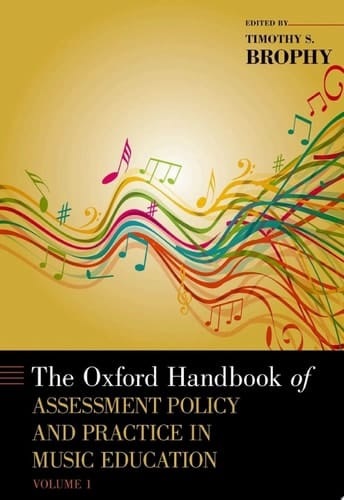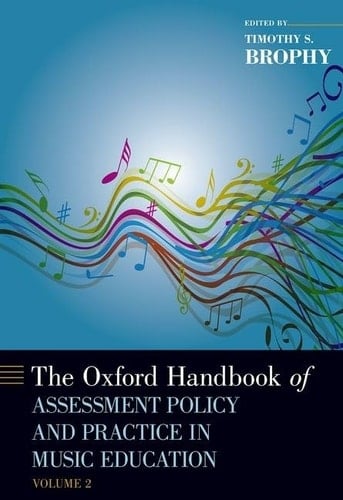
The Oxford Handbook of Assessment Policy and Practice in Music Education: Volume 2
Book 2 of 30 in the Oxford Handbooks series
0
0
Author Description
In the music classroom, instructors who hope to receive aid are required to provide data on their classroom programs. Due to the lack of reliable, valid large-scale assessments of student achievement in music, however, music educators in schools that accept funds face a considerable challenge in finding a way to measure student learning in their classrooms. From Australia to Taiwan to the Netherlands, music teachers experience similar struggles in the quest for a definitive assessment resource that can be used by both music educators and researchers. In this two-volume Handbook, contributors from across the globe come together to provide an authority on the assessment, measurement, and evaluation of student learning in music.The Handbook's first volume emphasizes international and theoretical perspectives on music education assessment in the major world regions. This volume also looks at technical aspects of measurement in music, and outlines situations where theoretical foundations can be applied to the development of tests in music. The Handbook's second volume offers a series of practical and US-focused approaches to music education assessment. Chapters address assessment in different types of US classrooms; how to assess specific skills or requirements; and how assessment can be used in tertiary and music teacher education classrooms. Together, both volumes of The Oxford Handbook of Assessment in Music Education pave the way forward for music educators and researchers in the field.
Menrva's Summary
THE THESIS
This volume investigates the practical application of assessment, measurement, and evaluation strategies within the context of music education in the United States. Edited by Timothy S. Brophy, the text compiles contributions from various experts to address the persistent challenge of quantifying student achievement in music classrooms. It provides a framework for educators to navigate accountability requirements while maintaining pedagogical integrity through structured assessment models.
THE SCOPE MAP
What You Will Find
- Practical assessment methodologies tailored for diverse US classroom environments
- Strategies for evaluating specific musical skills and curriculum requirements
- Applications of assessment theory within tertiary and music teacher education programs
Scope Limits
- Theoretical and international perspectives, which are primarily covered in the first volume of this series
- General music education policy outside of the United States
THE AUTHORITY PERSPECTIVE
Experts and practitioners identify this work as a significant resource for music educators seeking to align classroom practices with institutional accountability standards. Readers frequently note the technical density of the prose, which serves as a foundational reference for researchers and administrators in the field of music pedagogy.
Page Count:
992
Publication Date:
2019-01-01
ISBN-10:
0190248130
ISBN-13:
9780190248130
Music
Academic
Assessment
Pedagogy
Music Education
Education
Reference
Community Tags
More from Oxford Handbooks