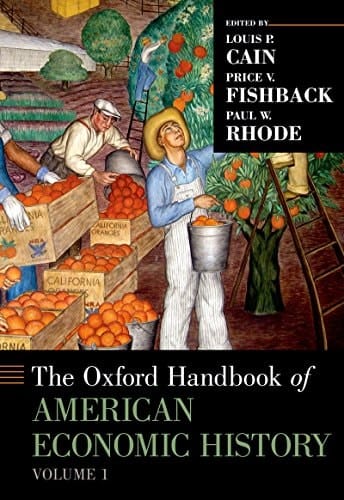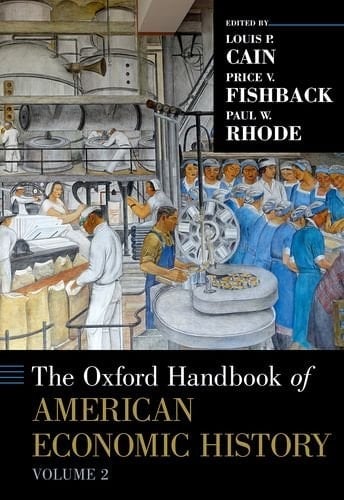
The Oxford Handbook of American Economic History: Vol. 2
Book 2 of 30 in the Oxford Handbooks series
0
0
Author Description
American economic history describes the transition of a handful of struggling settlements on the Atlantic seaboard into the nation with the most successful economy in the world today. As the economy has developed, so have the methods used by economic historians to analyze the process. Interest in economic history has sharply increased in recent years among the public, policy-makers, and in the academy. The current economic turmoil, calling forth comparisons with the Great Depression of the 1930s, is in part responsible for the surge in interest among the public and in policy circles. It has also stimulated greater scholarly research into past financial crises, the multiplier effects of fiscal and monetary policy, the dynamics of the housing market, and international economic cooperation and conflict. Other pressing policy issues--including the impending retirement of the Baby-Boom generation, the ongoing expansion of the healthcare sector, and the environmental challenges imposed by global climate change--have further increased demand for the long-run perspective given by economic history.Confronting this need, The Oxford Handbook of American Economic History affords access to the latest research on the crucial events, themes, and legacies of America's economic history--from colonial America, to the Civil War,up to present day. More than fifty contributors address topics as wide-ranging as immigration, agriculture, and urbanization. Over its two volumes, this handbook gives readers not only a comprhensive look at where the field of American economic history currently stands but where it is headed in the years to come.
Menrva's Summary
THE THESIS
This volume investigates the evolution of the American economy from its colonial origins to the modern era, seeking to provide a comprehensive synthesis of historical economic development. Edited by Louis P. Cain, Paul W. Rhode, and Price V. Fishback, the text compiles contributions from over fifty scholars to analyze how historical economic patterns inform contemporary policy challenges. The work utilizes quantitative data, institutional analysis, and long-run historical perspectives to explain the transition of the United States into a global economic power.
THE SCOPE MAP
What You Will Find
- Analysis of long-term trends in immigration, agriculture, and urbanization.
- Examination of financial crises, fiscal policy, and monetary history.
- Research on the housing market and international economic cooperation.
- Studies on the economic implications of demographic shifts and environmental change.
Scope Limits
- The text focuses primarily on the United States and does not provide a global comparative history.
- It serves as an academic survey of the field rather than a narrative history for general audiences.
THE AUTHORITY PERSPECTIVE
Experts recognize this handbook as a foundational reference for students and researchers of American economic history. Readers frequently note the academic density of the prose and the rigorous methodology employed by the contributors.
Page Count:
528
Publication Date:
2018-07-16
ISBN-10:
019088262X
ISBN-13:
9780190882624
History
Economics
Reference
Academic
American History
United States
Community Tags
More from Oxford Handbooks